


By Carlos Calzadilla, Founder & Outdoor Living Expert
By Carlos Calzadilla, Founder & Outdoor Living Expert
Updated: November 7, 2026
The distinct smell of burning wood and the hypnotic crackle of a rolling fire—it is the quintessential Carolina autumn experience. For many homeowners in Charlotte, Raleigh, and Fort Mill, the dream of outdoor living centers around hosting neighbors and family around a massive, custom fire pit as the winter chill sets in. But before you stack that cord of firewood and strike a match, there is a hidden, often-overlooked roadblock that can instantly extinguish your backyard dreams: your Homeowners Association. There are few things more frustrating than investing in a beautiful outdoor gathering space, only to receive a cease-and-desist letter and a hefty fine from your HOA board right in the middle of a neighborhood oyster roast.
Navigating strict community guidelines does not mean you have to abandon your vision for a cozy winter oasis; it simply requires smart, compliant architectural design. In this guide, we are breaking down the fierce debate between gas and wood-burning fire pits. We will explore exactly why an increasing number of Carolina neighborhoods are outright banning traditional wood fires, how to navigate your specific community bylaws, and why upgrading to a luxury, custom-built gas fire feature is the ultimate, stress-free solution for your outdoor living space.
If you live in a new, master-planned suburban development in Apex or Fort Mill, your lot lines are likely much tighter than older, rural properties. This proximity to your neighbors completely changes the rules of backyard fire safety and etiquette.
The primary reason Architectural Review Committees (ARCs) reject wood-burning fire pits is the smoke. A traditional wood fire is entirely at the mercy of the wind. On a breezy November evening, thick, blinding smoke can easily blow directly across your property line, enveloping your neighbor’s patio, seeping into their open windows, and ruining their evening. In densely populated neighborhoods, this quickly transitions from a minor annoyance to a formal nuisance complaint, prompting HOA boards to ban open wood fires entirely to keep the peace.
Beyond the smoke, wood fires present a very real environmental danger. The Carolinas are heavily populated with towering loblolly pines that drop massive amounts of dry pine needles onto our roofs and lawns every autumn. A sudden gust of wind can lift a glowing ember from a roaring wood fire and carry it directly into a gutter packed with dry pine straw. To mitigate this severe fire hazard, many strict communities now mandate that all outdoor fire features must be fully controllable and spark-free.
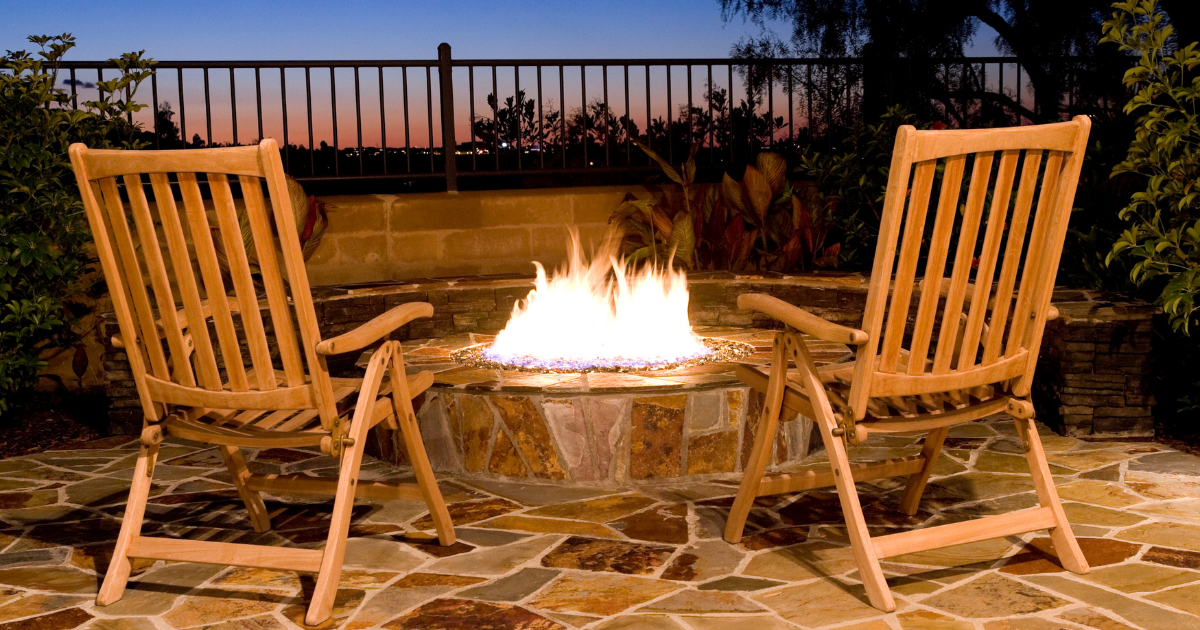
If wood is off the table, you might feel like you are losing the authentic fire experience. However, elite hardscape design has elevated the gas fire pit far beyond the cheap, portable aluminum tables you see at big-box hardware stores.
A custom masonry gas fire pit offers unparalleled luxury and convenience. Instead of spending twenty minutes fighting with damp kindling and lighter fluid, a gas system ignites instantly with the simple turn of a key and a match, or even the push of a button on your smartphone. You have absolute, precise control over the flame height and heat output. Most importantly, when the party is over or a sudden Carolina rainstorm rolls in, you simply shut off the valve. There are no smoldering ashes to monitor, no buckets of water to fetch, and no smelling like a campfire for the next two days.
A truly high-end gas fire feature is a permanent architectural asset, which means it requires meticulous subterranean engineering to survive our native environment. At SunSouth Carolinas, we never cut corners when mixing fire, gas, and Carolina red clay. Before we build your custom Techo-Bloc or Belgard fire surround, we trench deep below the frost line to lay dedicated, hard-piped natural gas or liquid propane lines.
Because red clay holds water and expands during winter freezes, we construct a heavily compacted, open-graded aggregate base beneath the heavy masonry. This ensures the ground never heaves and shifts, keeping your gas lines perfectly secure and your heavy stone fire pit dead-level for decades.
Because a built-in gas fire pit involves running permanent utility lines, it absolutely requires municipal plumbing permits in both North and South Carolina, in addition to your HOA’s architectural approval. This red tape can be a nightmare for a homeowner to navigate alone. Our comprehensive 3D design process eliminates this friction. We provide your ARC and the local city planners with hyper-realistic renderings and fully stamped engineering plans, proving your new fire feature is not only breathtakingly beautiful but also 100% compliant with all local safety codes and setback regulations.
Yes. Because a built-in gas fire pit requires tapping into your home’s natural gas supply or a buried liquid propane tank, it requires specialized plumbing permits from your local municipality to ensure the underground lines are trenched and pressure-tested safely. SunSouth Carolinas manages this entire permitting process for you.
In many cases, yes. If the existing masonry structure is sound, we can core-drill the stone, trench a new gas line to the location, and retrofit a stainless-steel burner ring and proper cross-ventilation system into the pit. However, it is often more cost-effective to rebuild the feature over a properly engineered, red-clay-proof foundation.
Absolutely. If your street does not have a municipal natural gas line, we can seamlessly design your fire feature to run on liquid propane (LP). We can discreetly bury a dedicated LP tank in your yard or build a beautiful masonry enclosure to hide a standard propane tank, ensuring your aesthetic remains flawless.
You shouldn’t have to spend your winter worrying about neighbor complaints, flying embers, or strict HOA fines. By upgrading to a custom-designed, heavily engineered gas fire pit, you instantly elevate the luxury of your backyard while guaranteeing total compliance with your community guidelines. At SunSouth Carolinas, we specialize in building breathtaking, stress-free outdoor living spaces that conquer the Carolina climate and sail through ARC reviews. We proudly serve the greater Charlotte metro area, Fort Mill, Raleigh, Apex, and the surrounding communities. Stop fighting with wet firewood and let us build the ultimate centerpiece for your winter entertaining.
About Carlos Calzadilla Founder & Outdoor Living Expert
Carlos is the founder of SunSouth Carolinas and a specialist in transforming outdoor spaces across the Carolinas. With a passion for custom hardscaping and 3D design, he helps homeowners in Fort Mill, Apex, and surrounding areas turn their backyards into functional living spaces. When he’s not on a job site ensuring top-quality construction, he’s sharing his latest projects and design tips on social media.
Proudly designing and building custom outdoor living spaces across the greater Charlotte metro area and Northern South Carolina. Our Fort Mill team serves a 20-mile radius, bringing expert hardscaping and 3D design to Fort Mill, Rock Hill, Tega Cay, Indian Land, Lake Wylie, Charlotte (including Ballantyne and Steele Creek), Pineville, Matthews, Weddington, and Waxhaw.
Proudly designing and building custom outdoor living spaces across Wake County and the greater Triangle area. Our Apex team serves a 20-mile radius, delivering high-end hardscaping, custom 3D design, and seamless installations to Apex, Cary, Raleigh (including North Hills and Brier Creek), Holly Springs, Morrisville, Fuquay-Varina, Garner, New Hill, Pittsboro, Willow Spring, and Chapel Hill.
Check out more outdoor living hacks on our blog
Select your project type below to explore the services and solutions that best fit your needs.
Email: info@sunsouthcarolinas.com
Hours: Mon – Fri | 8:00 AM – 5:00 PM




Copyright © 2026 SunSouth Carolinas | Privacy Policy | Terms of Service | Sitemap
Powered by Studio PECH.


Copyright © 2026 SunSouth Carolinas | Privacy Policy | Terms of Service | Sitemap
Powered by Studio PECH.