



By Carlos Calzadilla, Founder & Outdoor Living Expert
By Carlos Calzadilla, Founder & Outdoor Living Expert
Updated: November 7, 2026
A pristine swimming pool is the ultimate crown jewel of any luxury Carolina backyard, offering a private oasis during our sweltering, humid summers. However, that dream can quickly turn into a high-anxiety nightmare when you are walking around the pool and stub your toe on a raised edge of concrete. You look closer and realize that the pool deck is physically pulling away from the pool’s coping, creating a dangerous tripping hazard and a growing gap. For homeowners in Charlotte, Raleigh, and Fort Mill, this is a terrifying, yet incredibly common sight. The culprit is rarely the pool itself; the true enemy is the notorious Carolina red clay hidden directly beneath the concrete.
Ignoring a sinking pool deck is not an option. If left unchecked, the shifting earth will eventually snap the underground plumbing lines, crack the expensive pool shell, and lead to catastrophic water loss. The good news is that if you catch the early warning signs, you can halt the destruction before it ruins your investment. In this comprehensive guide, we will break down exactly how to identify the subtle signs of red clay settling. More importantly, you will discover why slapping a temporary patch on the problem never works, and how elite subterranean engineering and premium interlocking pavers are the only permanent solutions to save your aquatic retreat.
Carolina red clay is expansive. During heavy autumn rainstorms, it acts like a massive sponge, absorbing water and swelling violently. When the hot summer droughts arrive, it dries out and shrinks, creating hollow voids beneath your hardscaping. Over time, this aggressive expansion and contraction wreaks havoc on rigid concrete pool decks.
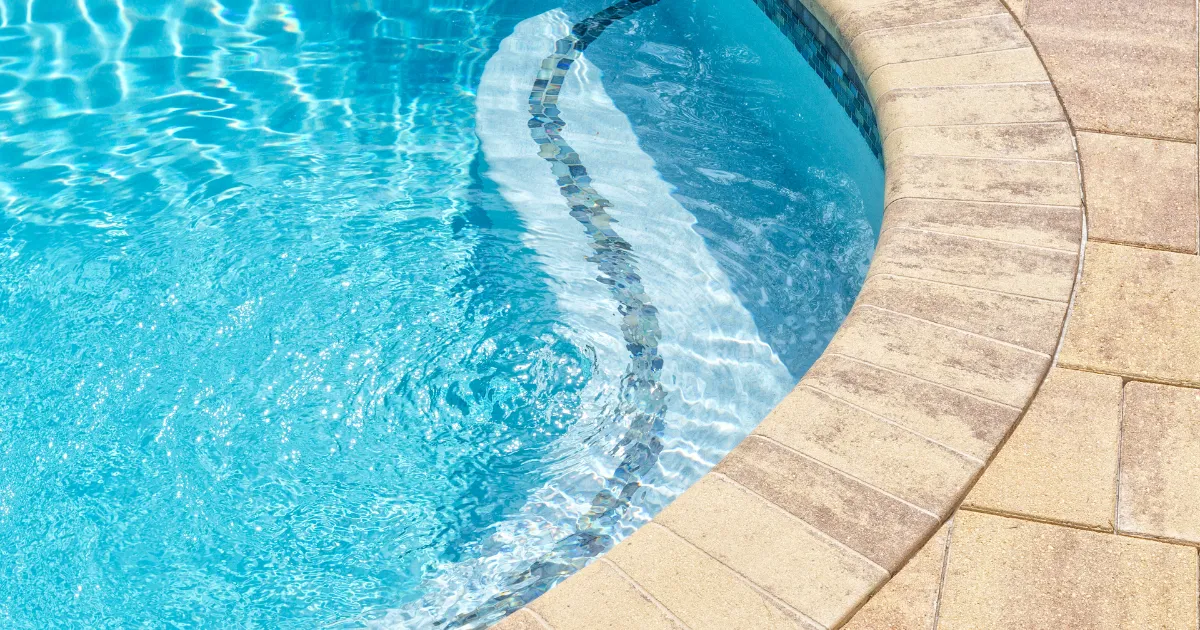
The earliest and most obvious warning sign of foundation failure is the “coping disconnect.” The coping is the decorative edge that sits directly on top of the pool shell. Because the pool shell is usually anchored deep into the earth, it rarely moves. However, if the deck surrounding the pool was poured over poorly compacted red clay, the deck will begin to sink. If you notice a vertical drop—even just a quarter of an inch—between the pool coping and your deck, or if the mastic sealant joint between them has torn open, the clay beneath your feet is actively settling.
A properly engineered pool deck is pitched slightly away from the pool, directing splashed water and rain into strategically placed landscape drains. If you begin to notice puddles of stagnant water forming on the deck after a rainstorm, it means the slab has sunk and reversed its pitch. This is incredibly dangerous because that standing water will eventually seep through the concrete, saturating the red clay below and rapidly accelerating the sinking process. Additionally, spiderweb-like hairline cracks radiating from the corners of the pool are a massive red flag that the rigid concrete is losing its subterranean support.
Many desperate homeowners try to fix a sinking deck by hiring a company to pump expanding foam or “mudjack” beneath the concrete. While this might lift the slab temporarily, it is merely a cosmetic band-aid. It does absolutely nothing to fix the underlying drainage or the volatile red clay, meaning the deck will inevitably sink again. A permanent fix requires surgical engineering.
To permanently solve the problem, the flawed rigid concrete must be removed. At SunSouth Carolinas, our commercial-grade restoration process begins with excavating the unstable red clay surrounding the pool shell. We remove this expansive soil and replace it with a deeply compacted, open-graded crushed aggregate base. We separate this new foundation from the raw earth using heavy-duty commercial geotextile fabrics. This creates a rigid, structural platform that supports massive weight and simply refuses to heave or settle, regardless of the weather.
Water management is the key to protecting your pool. When we rebuild your pool surround, we engineer stealthy, high-capacity drainage systems into the sub-base. By integrating sleek channel drains along the deck and deep French drains behind the retaining walls, we ensure that torrential Carolina downpours are captured and routed far away from the pool’s foundation. This completely starves the remaining red clay of the moisture it needs to expand.
Once the subterranean engineering is flawless, we upgrade the surface. Replacing a cracked concrete slab with another rigid concrete slab is a recipe for repeated failure. Instead, we install luxury interlocking pavers from industry leaders like Techo-Bloc and Belgard. Because a paver deck is comprised of hundreds of individual, high-density stones locked together with polymeric sand, it possesses micro-flexibility. It can effortlessly absorb any minute vibrations or temperature expansions without ever cracking. Plus, if an underground pool pipe ever does need servicing, our technicians can simply “unzip” a small section of the pavers, fix the pipe, and relay the exact same stones, making the repair completely invisible.
No. While you must replace torn mastic joint sealant to keep surface water out, simply filling a growing vertical gap with caulk or concrete patch is a dangerous band-aid. It does not stop the heavy concrete deck from continuing to sink, which will eventually crush the pool’s PVC plumbing lines buried beneath it.
Poured concrete is a single, rigid monolithic slab. When the red clay beneath it shifts even a fraction of an inch, the concrete snaps. An interlocking paver system is modular. It can gently flex and breathe with the environment without cracking, while the high-density stones themselves resist the corrosive effects of chlorine and saltwater far better than standard concrete.
Yes. Because replacing a pool deck fundamentally alters the footprint, drainage plan, and aesthetic of your property, almost all strict Architectural Review Committees (ARCs) in the Carolinas require formal approval. SunSouth Carolinas provides fully stamped engineering plans and 3D design renderings to ensure your HOA board approves the structural repair without delay.
A sinking pool deck is a ticking time bomb, but it is also an incredible opportunity to completely reimagine your backyard. By acting on the early warning signs, you can protect your expensive pool shell and upgrade from a boring, cracked concrete slab to a breathtaking, heavily engineered luxury paver surround. At SunSouth Carolinas, we specialize in conquering the Carolina red clay. We combine elite subterranean engineering, advanced drainage solutions, and premium hardscaping materials to build outdoor living spaces that last a lifetime. We proudly serve the greater Charlotte metro area, Fort Mill, Raleigh, Apex, and the surrounding communities.
About Carlos Calzadilla Founder & Outdoor Living Expert
Carlos is the founder of SunSouth Carolinas and a specialist in transforming outdoor spaces across the Carolinas. With a passion for custom hardscaping and 3D design, he helps homeowners in Fort Mill, Apex, and surrounding areas turn their backyards into functional living spaces. When he’s not on a job site ensuring top-quality construction, he’s sharing his latest projects and design tips on social media.
Proudly designing and building custom outdoor living spaces across the greater Charlotte metro area and Northern South Carolina. Our Fort Mill team serves a 20-mile radius, bringing expert hardscaping and 3D design to Fort Mill, Rock Hill, Tega Cay, Indian Land, Lake Wylie, Charlotte (including Ballantyne and Steele Creek), Pineville, Matthews, Weddington, and Waxhaw.
Proudly designing and building custom outdoor living spaces across Wake County and the greater Triangle area. Our Apex team serves a 20-mile radius, delivering high-end hardscaping, custom 3D design, and seamless installations to Apex, Cary, Raleigh (including North Hills and Brier Creek), Holly Springs, Morrisville, Fuquay-Varina, Garner, New Hill, Pittsboro, Willow Spring, and Chapel Hill.
Check out more outdoor living hacks on our blog
Select your project type below to explore the services and solutions that best fit your needs.
Email: info@sunsouthcarolinas.com
Hours: Mon – Fri | 8:00 AM – 5:00 PM




Copyright © 2026 SunSouth Carolinas | Privacy Policy | Terms of Service | Sitemap
Powered by Studio PECH.


Copyright © 2026 SunSouth Carolinas | Privacy Policy | Terms of Service | Sitemap
Powered by Studio PECH.


